Layer 2 Networks Explained: Faster, Cheaper Crypto
# Layer 2 Networks Explained: Faster, Cheaper Crypto
If you have ever tried sending a small amount of Ethereum and seen a network fee that felt bigger than the transfer itself, you have already met the problem that Layer 2 networks were built to solve. Layer 2 networks are systems built on top of a main blockchain that handle transactions more cheaply and quickly, while still relying on the main chain for final security.
Think of the main blockchain, often called Layer 1, as a busy highway. When too many vehicles try to use it at once, traffic slows down and tolls go up. A Layer 2 is like a well-planned service road and express lane system beside that highway: most of the everyday driving happens there smoothly, and only a combined record of the journeys is reported back to the main highway. For Indian beginners who mostly make small transfers in rupees, understanding this idea can save real money on fees and a lot of confusion.
> Educational content only. This is not financial advice. Crypto markets are volatile — never invest money you can't afford to lose.
What Is a Layer 1 Blockchain?
Layer 1 is the base network itself: Bitcoin, Ethereum, and Solana are all Layer 1 blockchains. This is where the final record of ownership lives, where validators or miners do their work, and where security is strongest. Every transaction on a Layer 1 has to be checked and stored by the network, and that careful checking is exactly what makes it slow and expensive during busy periods.
Ethereum, for example, can only process a limited number of transactions per second. When demand spikes — during a popular token launch or a volatile market day — users bid against each other for space in the next block. That bidding is why gas fees jump. The network is not broken; it is simply congested, rather like UPI servers feeling the load on a festival shopping day, except here the fee is set by open competition for limited space.
What Is a Layer 2 Network, Exactly?
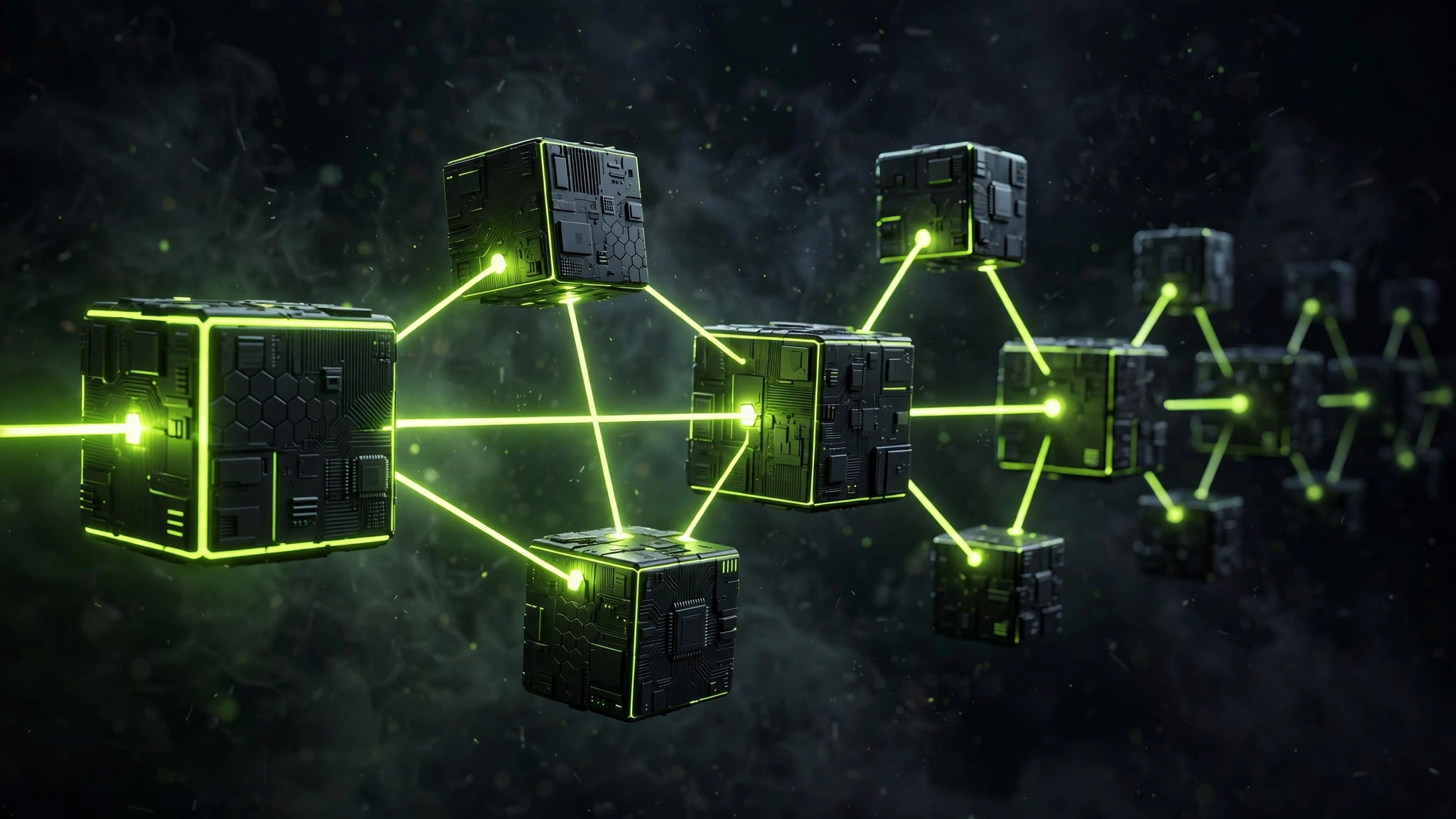
A Layer 2 network is a second system that sits on top of a Layer 1 and does most of the heavy lifting away from the main chain. Instead of recording every single transaction directly on Ethereum, a Layer 2 collects hundreds or thousands of transactions, processes them on its own faster system, compresses them into a neat summary, and posts that summary to Ethereum.
Because only the summary touches the expensive main chain, the cost of that one Ethereum transaction gets shared across everyone in the bundle. The result for you is simple: transfers that might have cost the equivalent of several hundred rupees in gas on Layer 1 can cost just a few rupees, sometimes less, on a Layer 2, and they usually confirm in seconds rather than minutes.
Well-known examples of Layer 2 networks built on Ethereum include Arbitrum, Optimism, Base, and zkSync. Polygon, which many Indian readers know because of its Indian founding team, is often discussed in the same conversation; technically its main chain works as a sidechain, and the project has also built Layer 2 technology. The names matter less than the idea: do the work off the main chain, settle the proof on it.
How Layer 2 Networks Actually Work
You do not need an engineering degree to follow the basic flow. It happens in four steps.
First, you move some crypto from Layer 1 to the Layer 2 through what is called a bridge — a tool that locks your funds on the main chain and gives you an equivalent balance on the Layer 2. Second, you transact freely on the Layer 2: sending tokens, swapping on a decentralised exchange, or using an app, all at low fees. Third, behind the scenes, the Layer 2 operator bundles large batches of these transactions together. Fourth, it posts a compressed record, along with a proof that the batch was processed correctly, back to Layer 1.
There are two main families of proof. Optimistic rollups assume batches are valid unless someone challenges them during a waiting period, which is why withdrawing from some of them back to Ethereum can take several days. ZK rollups use advanced mathematics called zero-knowledge proofs to verify each batch instantly, so withdrawals can be faster. As a beginner, you mainly need to remember one practical point: moving money in is usually quick, but moving it back to Layer 1 can sometimes involve a wait, depending on the network.
Layer 1 vs Layer 2: A Quick Comparison
| Feature | Layer 1 (Ethereum mainnet) | Layer 2 networks |
|---|---|---|
| Speed | Slower during congestion | Usually near-instant |
| Fees | Can be high, sometimes hundreds of rupees | Typically a few rupees or less |
| Security | Strongest, directly from the base chain | Inherits much of Layer 1 security |
| Best for | Large settlements, maximum security | Everyday transfers, swaps, and apps |
| Withdrawal to main chain | Not applicable | Can involve a waiting period on some networks |
Why Layer 2 Networks Matter for Indian Users
Fees hurt small users the most. If you are learning with ₹1,000 or ₹2,000 — a sensible way to practise — a single expensive Layer 1 transaction can consume a painful share of that amount before you have learned anything. On a Layer 2, the same practice transfer costs very little, so your learning budget actually goes towards learning.
There is also an access angle. Many global apps and decentralised exchanges are deploying first, or only, on Layer 2 networks because that is where users can afford to use them. If you only ever look at Ethereum mainnet, parts of the modern crypto ecosystem will seem strangely expensive or empty. Knowing that the same app may exist on a cheaper network helps you understand price quotes and fee comparisons you see online.
A word of caution on how you get there. Most Indian beginners buy crypto with INR through UPI on Indian exchanges such as CoinDCX, WazirX, or ZebPay. Some exchanges let you withdraw directly to certain Layer 2 networks, which is usually cheaper than withdrawing to Ethereum mainnet and bridging yourself. Always check the exact network name on both the sending and receiving side before confirming a withdrawal. Sending funds on the wrong network is one of the most common and costly beginner mistakes, and recovery is often impossible.
The Risks Beginners Should Know
Layer 2 networks reduce fees; they do not remove risk. Bridges have historically been a favourite target for hackers, because they hold large pools of locked funds, so use only the official bridge linked from the network's own website, and be suspicious of bridge links sent in Telegram or WhatsApp groups. Smart contracts on any network can contain bugs. Newer networks may have downtime, or rely on a single operator to process transactions, which is a compromise compared with the fully decentralised base chain.
Your personal safety rules stay exactly the same as on Layer 1. Never share your seed phrase with anyone, for any reason. Start with a tiny test transfer before moving a larger amount. Bookmark official websites instead of searching for them each time, because fake copies of popular network and wallet sites are common. And remember that a cheaper transaction is still a real transaction: a swap on a Layer 2 is just as final, and just as taxable, as one on the main chain.
Tax note: crypto tax rules can change — the 30% rate and 1% TDS described here were current as of September 2026. Verify the latest rules before filing. Swapping one token for another on any network counts as a transfer for tax purposes in India, so keep a simple record of dates, amounts in INR, and fees for every transaction, whichever network you used.
How to Use a Layer 2 Network: A Beginner Walkthrough
If you decide to try one for learning, the careful route looks like this. First, choose a well-established network and add it to a reputable wallet using the network details from its official documentation — never from a random video comment. Second, fund it the cheapest safe way available to you: a direct withdrawal from your Indian exchange to that network if supported, or the official bridge if not. Third, send a very small test amount and confirm it arrives. Fourth, make your intended transfer or swap, checking the fee shown before you approve. Finally, note the transaction in your records for tax time.
At each step, slow down at the confirmation screen. Check that the network name, the receiving address, and the token all match what you intended. That ten-second habit prevents more losses than any advanced tool.
Conclusion
Layer 2 networks are not a new kind of coin and not a shortcut to profit. They are plumbing: a practical upgrade that lets a secure but congested blockchain handle everyday traffic at everyday prices. For Indian beginners, the takeaway is straightforward — understand that Layer 1 is where final security lives, Layer 2 is where cheap, fast activity happens, bridges are the risky doorway between them, and the same rules of research, small test transfers, and honest record-keeping apply everywhere. Learn the plumbing first, and the rest of crypto becomes far less confusing.
Frequently Asked Questions
What is a Layer 2 network in simple words?
A Layer 2 network is a separate system built on top of a main blockchain like Ethereum. It processes many transactions off the main chain, bundles them together, and posts a summary back to the main chain, which makes transfers faster and fees much lower.
Are Layer 2 networks safe to use?
Well-established Layer 2 networks inherit much of their security from the main blockchain, but they are not risk-free. Bridges, smart contracts, and newer networks can have bugs or outages, so beginners should start with small amounts and use only official websites and links.
Do I pay tax when I use a Layer 2 network in India?
Using a network itself is not a separate tax event, but selling or swapping crypto on any network can be taxable in India. Profits from transfers of virtual digital assets are generally taxed at 30% with 1% TDS on certain transactions, current as of September 2026. Keep records and verify the latest rules before filing.
Keep Learning
If you found this guide useful, these related guides will help you go deeper:
Frequently asked questions
What is a Layer 2 network in simple words?
A Layer 2 network is a separate system built on top of a main blockchain like Ethereum. It processes many transactions off the main chain, bundles them together, and posts a summary back to the main chain, which makes transfers faster and fees much lower.
Are Layer 2 networks safe to use?
Well-established Layer 2 networks inherit much of their security from the main blockchain, but they are not risk-free. Bridges, smart contracts, and newer networks can have bugs or outages, so beginners should start with small amounts and use only official websites and links.
Do I pay tax when I use a Layer 2 network in India?
Using a network itself is not a separate tax event, but selling or swapping crypto on any network can be taxable in India. Profits from transfers of virtual digital assets are generally taxed at 30% with 1% TDS on certain transactions, current as of September 2026. Keep records and verify the latest rules before filing.
Related guides
- What Is a Merkle Tree? Blockchain Data Explained Simply — A Merkle tree lets a blockchain prove thousands of transactions with one small fingerprint. Learn how hashes, leaves and roots keep crypto data tamper-proof.
- What Is Decentralised Storage? IPFS Explained for Beginners — IPFS stores files across many computers instead of one server. Learn how decentralised storage works, its limits, and what Indian beginners should know.
- What Is Sharding? How Blockchains Split to Scale Faster — Sharding splits a blockchain into parallel pieces to handle more transactions. Learn how shards work, Ethereum's danksharding plan, and the key risks.