What Are Sidechains? How Blockchains Scale, Explained
# What Are Sidechains? How Blockchains Scale, Explained
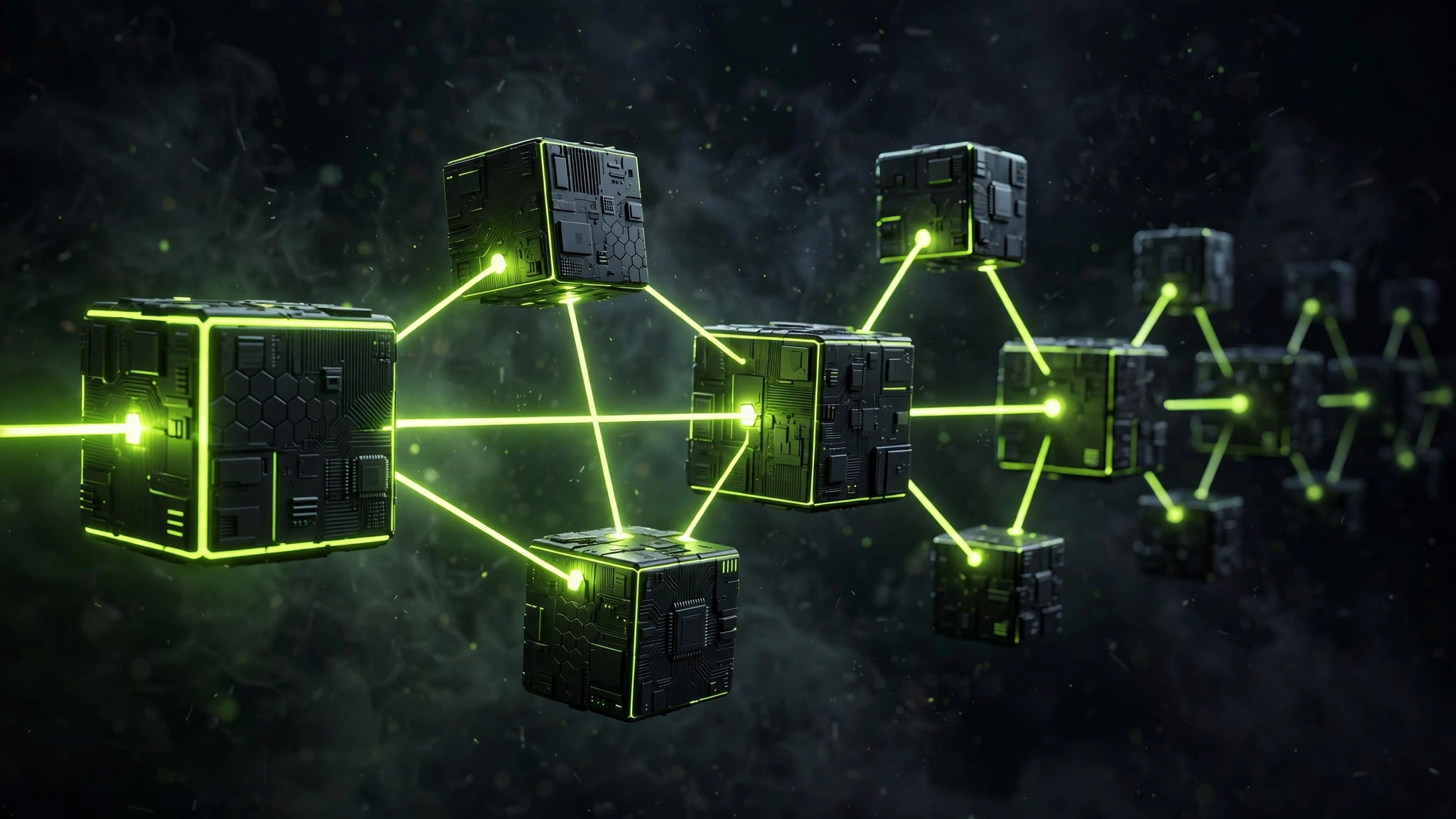
What are sidechains? They are one of the oldest answers to a familiar problem: a popular blockchain can only process so many transactions, and when demand rises, fees rise and waits get longer. A sidechain takes a different route from simply making the main chain bigger. It runs a second, independent blockchain alongside the main one, connected by a bridge, so some activity can move to a faster, cheaper road while the main chain stays as it is.
> Educational content only. This is not financial advice. Crypto markets are volatile — never invest money you can't afford to lose.
A Sidechain Is Its Own Blockchain, Not an Add-On
The most important thing to understand is that a sidechain is not a feature inside the main blockchain. It is a complete blockchain of its own. It has its own blocks, its own validators who approve transactions, its own consensus rules for agreeing on the record, and often its own native token used to pay transaction fees.
Think of the main chain as a national highway and a sidechain as a service road running beside it. The service road has its own surface, its own speed, and its own traffic rules. Cars can move between the two at specific entry and exit points, but while a car is on the service road, the highway's rules do not protect it — the service road's own condition is what matters.
That independence is both the strength and the weakness of the design. Because a sidechain sets its own rules, it can be tuned for speed and low fees in ways a large main chain cannot. Because it stands alone, it must also secure itself.
How Assets Move: The Two-Way Peg
A cryptocurrency that lives on a main chain cannot simply float across to another blockchain — each chain keeps its own ledger. Sidechains solve this with a mechanism often called a two-way peg, operated by a bridge. In simple steps:
- Lock on the main chain. You send your coins to a designated lock address or contract on the main chain. They stay there, frozen, as backing.
- Release on the sidechain. Once the lock is confirmed, an equivalent amount is released or created for you on the sidechain.
- Use it on the sidechain. You can now transfer or use that representation on the sidechain, usually with lower fees and faster confirmations.
- Return the same way. To go back, the sidechain amount is locked or burned there, and the original coins are released on the main chain.
Why Sidechains Are Faster and Cheaper
A main chain like Bitcoin or Ethereum is deliberately conservative: thousands of computers worldwide must agree on every block, and that caution costs time and fees. A sidechain can make different trade-offs. It may use a smaller, faster validator set, produce blocks more frequently, and charge fees in its own token at amounts designed to stay low.
For a beginner in India, the practical effect appears in everyday places. An exchange may offer withdrawals over more than one network, and the sidechain option often shows a much lower withdrawal fee than the main chain. Apps and games that would be painfully expensive on a busy main chain can run affordably when each small action costs a fraction of a rupee in network fees instead of many rupees.
Lower fees, however, are not free. They are usually bought with the trade-offs in the next sections.
Sidechain vs Main Chain vs Layer 2
Beginners often meet the words "sidechain" and "Layer 2" together and assume they mean the same thing. They do not, and the difference matters more than any other detail in this guide.
| Question | Main chain (Layer 1) | Sidechain | Layer 2 |
|---|---|---|---|
| What is it? | The base blockchain itself | A separate, independent blockchain | A system built on top of the main chain |
| Who secures it? | Its own large validator or miner set | Its own, usually smaller, validator set | Inherits security from the main chain |
| How do assets arrive? | Native to the chain | Locked on main chain, released via bridge | Deposited, with final record settled on main chain |
| Typical fees | Highest when busy | Low | Low |
| Main risk to understand | Congestion and high fees | Own security plus bridge risk | Bridge and contract risk, newer technology |
The Security Trade-Off, Stated Plainly
A main chain with a huge, widely spread validator set is extremely expensive to attack. A sidechain with a much smaller set of validators is cheaper to run — and cheaper to attack or influence. If enough of a sidechain's validators act dishonestly or are compromised, transactions on that chain can be manipulated, and the locked backing on the main chain can be put at risk.
This does not make every sidechain unsafe; well-run sidechains with reputable, diverse validators have operated for years. It does mean the question "who validates this chain, and how many of them are there?" is a real safety question, not a technical detail. A sidechain also adds bridge risk on top: bridges hold large pools of locked assets, which makes them attractive targets, and several of the biggest crypto thefts anywhere have happened at bridges rather than on blockchains themselves.
There are quieter risks too. The sidechain version of a coin is a representation backed by locked originals, so its value depends on that backing staying intact and redeemable. Fees on the sidechain are paid in its own token, which surprises beginners who move a coin across and then discover they cannot move it further until they also hold a small amount of the fee token. And sending to a wallet address on the wrong network remains one of the easiest ways to lose access to funds entirely.
Where Indian Beginners Actually Meet Sidechains
Most Indian users do not seek out a sidechain deliberately — they meet one at an exchange withdrawal screen. You buy crypto on an Indian exchange using INR through UPI or a bank transfer, choose to withdraw, and the app asks which network to use. Choosing a sidechain network can cut the fee sharply, but the receiving wallet or exchange must support that exact network, and the deposit address network must match the withdrawal network exactly.
Three habits protect you here. First, always send a small test amount before a large transfer. Second, check which token pays the fee on the destination chain, so your funds do not arrive stranded. Third, keep a record of every cross-chain move — date, amount, both networks, and the transaction ID. If you later sell or swap the asset, Indian tax rules apply to that disposal wherever it happens. Tax note: crypto tax rules can change — the 30% rate and 1% TDS described here were current as of September 2026. Verify the latest rules before filing.
A Five-Point Check Before Using Any Sidechain
- Name the chain. Know whether you are using a sidechain, a Layer 2, or the main chain — and who secures it.
- Check the validators. Prefer established networks with a broad, reputable validator set over brand-new chains promising extreme speed.
- Use official bridges and links only. Fake bridge websites are a common scam; never follow bridge links from random Telegram or WhatsApp messages.
- Confirm network support at both ends. The sending and receiving platforms must both support the same network for that exact coin.
- Start small. Test with a small amount, confirm it arrives, and only then move more.
Frequently Asked Questions
What is a sidechain in simple words? A sidechain is a separate, independent blockchain that runs alongside a main blockchain and connects to it through a bridge. It has its own validators, its own rules, and its own security. Assets move between the two chains by being locked on one side and released or recreated on the other.
What is the difference between a sidechain and a Layer 2? The key difference is security. A Layer 2 network is built on top of a main chain and inherits much of that chain's security. A sidechain is its own blockchain with its own validators, so it is responsible for its own security — if its validator set is small or weak, the sidechain itself is easier to attack.
Is using a sidechain taxable in India? Moving your own crypto between chains is generally a transfer, but selling, swapping, or spending crypto on any chain can be a taxable event in India. Profits from transfers of virtual digital assets are generally taxed at 30% with 1% TDS on certain transactions, current as of September 2026. Keep records of every move and verify the latest rules before filing.
The Bottom Line
A sidechain is an independent blockchain connected to a main chain by a bridge: faster and cheaper because it sets its own rules, and riskier in a specific way because it must secure itself. Once you remember that single trade-off — borrowed security versus its own security — sidechains, Layer 2 networks, and main chains stop blurring together, and withdrawal screens and bridge pages become much easier to read calmly.
Keep Learning
If you found this guide useful, these related guides will help you go deeper:
Frequently asked questions
What is a sidechain in simple words?
A sidechain is a separate, independent blockchain that runs alongside a main blockchain and connects to it through a bridge. It has its own validators, its own rules, and its own security. Assets move between the two chains by being locked on one side and released or recreated on the other.
What is the difference between a sidechain and a Layer 2?
The key difference is security. A Layer 2 network is built on top of a main chain and inherits much of that chain's security. A sidechain is its own blockchain with its own validators, so it is responsible for its own security — if its validator set is small or weak, the sidechain itself is easier to attack.
Is using a sidechain taxable in India?
Moving your own crypto between chains is generally a transfer, but selling, swapping, or spending crypto on any chain can be a taxable event in India. Profits from transfers of virtual digital assets are generally taxed at 30% with 1% TDS on certain transactions, current as of September 2026. Keep records of every move and verify the latest rules before filing.
Related guides
- What Is a Merkle Tree? Blockchain Data Explained Simply — A Merkle tree lets a blockchain prove thousands of transactions with one small fingerprint. Learn how hashes, leaves and roots keep crypto data tamper-proof.
- What Is Decentralised Storage? IPFS Explained for Beginners — IPFS stores files across many computers instead of one server. Learn how decentralised storage works, its limits, and what Indian beginners should know.
- What Is Sharding? How Blockchains Split to Scale Faster — Sharding splits a blockchain into parallel pieces to handle more transactions. Learn how shards work, Ethereum's danksharding plan, and the key risks.