What Is a Node in Crypto? Validators Explained Simply
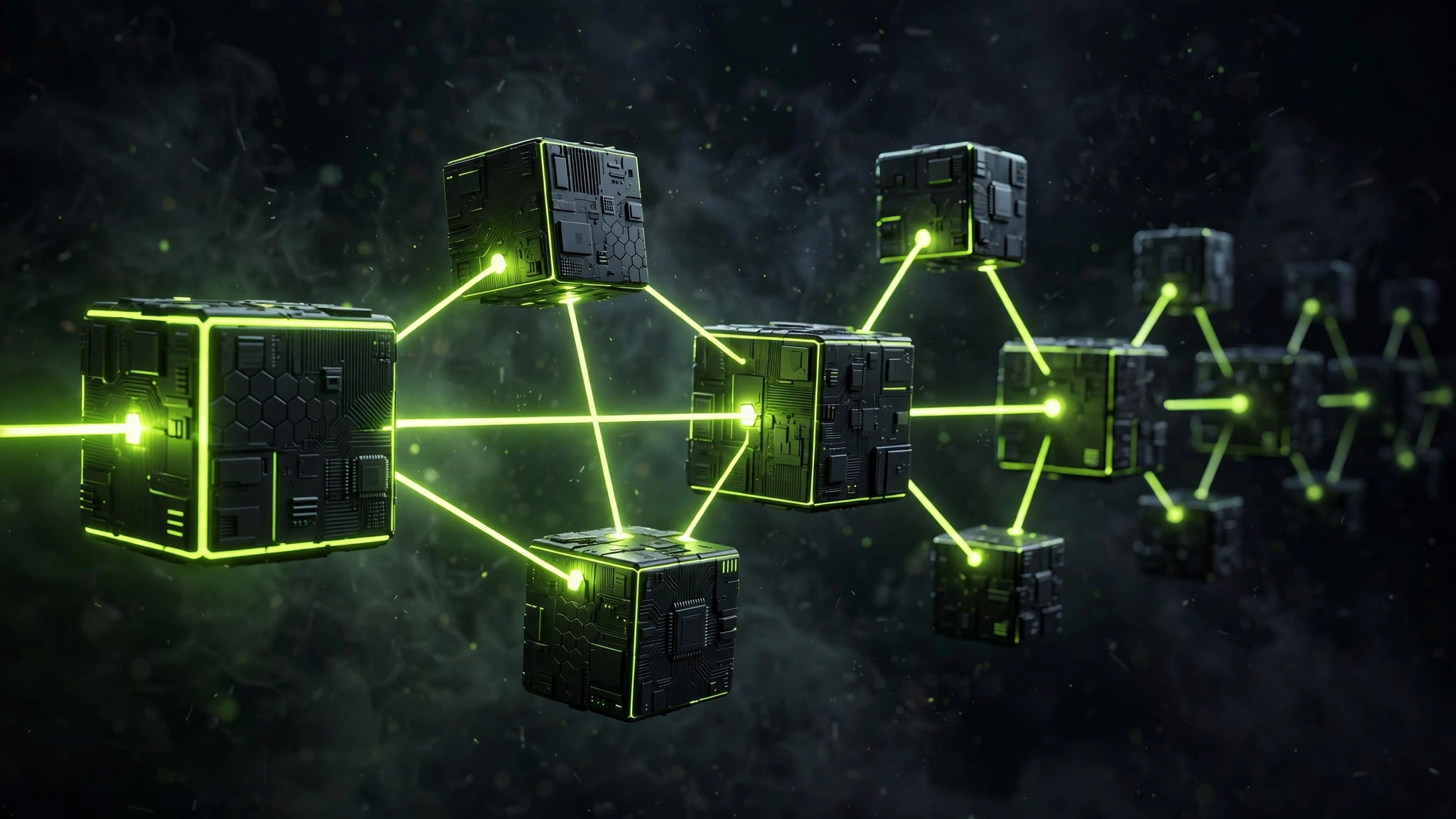
Every time you open a crypto app in India, something quietly answers your request: a crypto node has checked the blockchain, confirmed your balance, and shown you the result. Yet most beginners never learn what a node actually is, or how validators keep the whole system running without a bank or a head office in charge. This guide explains nodes and validators in plain language — what they do, how they differ from miners, and why you almost certainly do not need to run one yourself.
> Educational content only. This is not financial advice. Crypto markets are volatile — never invest money you can't afford to lose.
What Is a Crypto Node, in Simple Words?
A node is simply a computer running blockchain software. That software does three jobs: it stores a copy of the blockchain's transaction history, it checks every new transaction and block against the network's rules, and it passes valid information along to other nodes.
Picture a shared account book copied into thousands of notebooks. In India, a traditional bank keeps one master ledger in its own systems, and customers must trust the bank's copy. A blockchain works the opposite way: thousands of independent computers each keep a full copy of the same ledger, and they constantly compare notes. If one computer tries to cheat — say, by recording a payment that never happened — the others reject it because it does not match the rules or their copies.
That is the real meaning of "decentralised." There is no single server to shut down, hack, or quietly edit. The truth about who owns what is whatever the majority of honest nodes agree the records show.
What a Node Actually Does All Day
A node's routine sounds dull, and that is precisely why it works:
- It listens. Nodes connect to other nodes and receive newly broadcast transactions and blocks.
- It verifies. Before accepting anything, the node checks signatures, balances, and rule compliance — for example, that nobody is spending the same coin twice.
- It stores. Valid blocks are added to its copy of the chain, which grows steadily over time.
- It relays. The node forwards valid transactions and blocks to its peers, so news spreads across the network in seconds.
- It serves. When a wallet or exchange asks for a balance or transaction status, a node supplies the answer from its verified copy.
Types of Nodes: Full, Light, and Archive
Not every node stores everything. The main types differ in how much data they keep and how much they trust others.
| Node type | What it stores | Who typically uses it | Trust level |
|---|---|---|---|
| Full node | The complete blockchain history and current state | Enthusiasts, businesses, exchanges | Verifies everything itself |
| Light node | Only block summaries, fetching details when needed | Mobile wallets, everyday users | Relies partly on full nodes |
| Archive node | Complete history plus every past state | Developers, analytics and tax tools | Verifies everything, keeps far more data |
Nodes vs Validators vs Miners: Clearing the Confusion
These three words describe related but different roles, and mixing them up leads beginners into scams.
| Role | Main job | Found on | Needs |
|---|---|---|---|
| Node | Stores the ledger and checks the rules | Every blockchain | A computer, storage, internet |
| Validator | Proposes and confirms new blocks | Proof-of-stake networks | Locked-up stake, near-constant uptime |
| Miner | Competes to create new blocks | Proof-of-work networks like Bitcoin | Computing hardware and electricity |
How Validators Keep a Blockchain Running
On proof-of-stake networks, validators do the block-creating work in an orderly rotation instead of a computing race. The cycle looks like this:
- Transactions gather. Payments and app activity wait in a holding area, sometimes called the mempool.
- A validator is chosen. The protocol picks a validator — the more stake locked, the higher the chance of selection over time.
- A block is proposed. The chosen validator bundles waiting transactions into a new block and broadcasts it.
- Other validators attest. Fellow validators, through their nodes, check the block. If it follows the rules, they vote to accept it.
- The block becomes final. Once enough votes agree, the block joins the permanent chain and the process repeats every few seconds.
Why Nodes Matter to Ordinary Beginners
You may never run a node, yet nodes protect you every day. Because thousands of independent copies exist, an exchange app cannot invent a balance, and a failed company server cannot erase the record of your holdings on the blockchain itself. Nodes are also why a transaction can be checked publicly on a block explorer — the explorer is just reading data from nodes and presenting it in a friendly format.
Nodes also explain some beginner frustrations. A transfer shows as "pending" until a block including it gains enough confirmations from the network. Networks get busy, fees rise, and confirmations slow down — not because an app is being difficult, but because thousands of nodes must receive, verify, and agree on each new block.
Should You Run Your Own Node?
For most Indian beginners, the honest answer is no — and that is fine. Wallet and exchange apps run nodes for you at no extra effort. Running a full node makes sense mainly if you want to verify transactions without trusting anyone, you are learning how blockchains work, or you are building a crypto-related product.
If curiosity still pulls you, understand the practical costs first. A full node for a major network can need hundreds of gigabytes of storage, a computer that stays on for long hours, steady broadband, and electricity you pay for in rupees every month. It earns nothing by itself. Be extremely wary of anyone on Telegram or WhatsApp selling "node packages" or "validator plans" with promised monthly returns in exchange for an upfront payment — legitimate node software is free to download, and guaranteed-income node schemes are a well-known scam pattern targeting Indian investors.
A brief tax note also applies if you ever receive validator rewards: such rewards are generally treated as income, and later transfers of virtual digital assets fall under India's crypto tax framework. Tax note: crypto tax rules can change — the 30% rate and 1% TDS described here were current as of September 2026. Verify the latest rules before filing.
The Bottom Line
A crypto node is the quiet record-keeper of a blockchain: a computer that stores the full ledger, checks every entry against the rules, and shares the verified truth with everyone else. Validators are the smaller, stake-backed group that builds new blocks on proof-of-stake networks, kept honest because their own funds punish bad behaviour. You do not need to run either to learn or participate as a beginner — but understanding them explains why blockchains work without a bank, why confirmations take time, and why any scheme selling easy "node income" deserves to be ignored.
Frequently Asked Questions
Do I need to run a node to use crypto in India? No. When you use an exchange app or a wallet, that service runs nodes on your behalf, so you can buy, sell, and transfer crypto without running any software yourself. Running your own node is optional — it mainly helps people who want to verify transactions independently instead of trusting an app.
Is a node the same as a validator or a miner? No, although the words are often mixed up. A node stores a copy of the blockchain and checks that transactions follow the rules. A validator is a special participant on proof-of-stake networks who proposes and confirms new blocks, usually after locking up funds as stake. A miner does similar block-creating work on proof-of-work networks like Bitcoin, using computing power instead of stake.
Can running a node or validator earn me money? An ordinary node earns nothing — it is unpaid checking and storage work that keeps the network healthy. Validators on proof-of-stake networks can receive protocol rewards, but they must lock up a large stake, stay online almost constantly, and can lose part of that stake if their software misbehaves. It is a technical, risky activity, not a simple passive-income scheme, and anyone promising guaranteed node income is a red flag.
Keep Learning
If you found this guide useful, these related guides will help you go deeper:
Frequently asked questions
Do I need to run a node to use crypto in India?
No. When you use an exchange app or a wallet, that service runs nodes on your behalf, so you can buy, sell, and transfer crypto without running any software yourself. Running your own node is optional — it mainly helps people who want to verify transactions independently instead of trusting an app.
Is a node the same as a validator or a miner?
No, although the words are often mixed up. A node stores a copy of the blockchain and checks that transactions follow the rules. A validator is a special participant on proof-of-stake networks who proposes and confirms new blocks, usually after locking up funds as stake. A miner does similar block-creating work on proof-of-work networks like Bitcoin, using computing power instead of stake.
Can running a node or validator earn me money?
An ordinary node earns nothing — it is unpaid checking and storage work that keeps the network healthy. Validators on proof-of-stake networks can receive protocol rewards, but they must lock up a large stake, stay online almost constantly, and can lose part of that stake if their software misbehaves. It is a technical, risky activity, not a simple passive-income scheme, and anyone promising guaranteed node income is a red flag.
Related guides
- What Is a Merkle Tree? Blockchain Data Explained Simply — A Merkle tree lets a blockchain prove thousands of transactions with one small fingerprint. Learn how hashes, leaves and roots keep crypto data tamper-proof.
- What Is Decentralised Storage? IPFS Explained for Beginners — IPFS stores files across many computers instead of one server. Learn how decentralised storage works, its limits, and what Indian beginners should know.
- What Is Sharding? How Blockchains Split to Scale Faster — Sharding splits a blockchain into parallel pieces to handle more transactions. Learn how shards work, Ethereum's danksharding plan, and the key risks.