What is Blockchain Technology? A No-Jargon Guide
"Blockchain" is one of those words people use confidently at dinner parties without really understanding. By the end of this guide, you will understand it better than most of them. No jargon, no math degree required.
> Educational content only. This is not financial advice.
Start Here: The Shared Notebook
Imagine a notebook that thousands of people around the world all hold copies of. Anyone can write a new entry (following strict rules), everyone can read every entry, but nobody can erase or secretly alter past entries. When a new page is added, every copy of the notebook updates simultaneously.
That notebook is a blockchain. More precisely, a blockchain is a distributed digital ledger — a record-keeping system spread across many computers instead of sitting on one company's server.
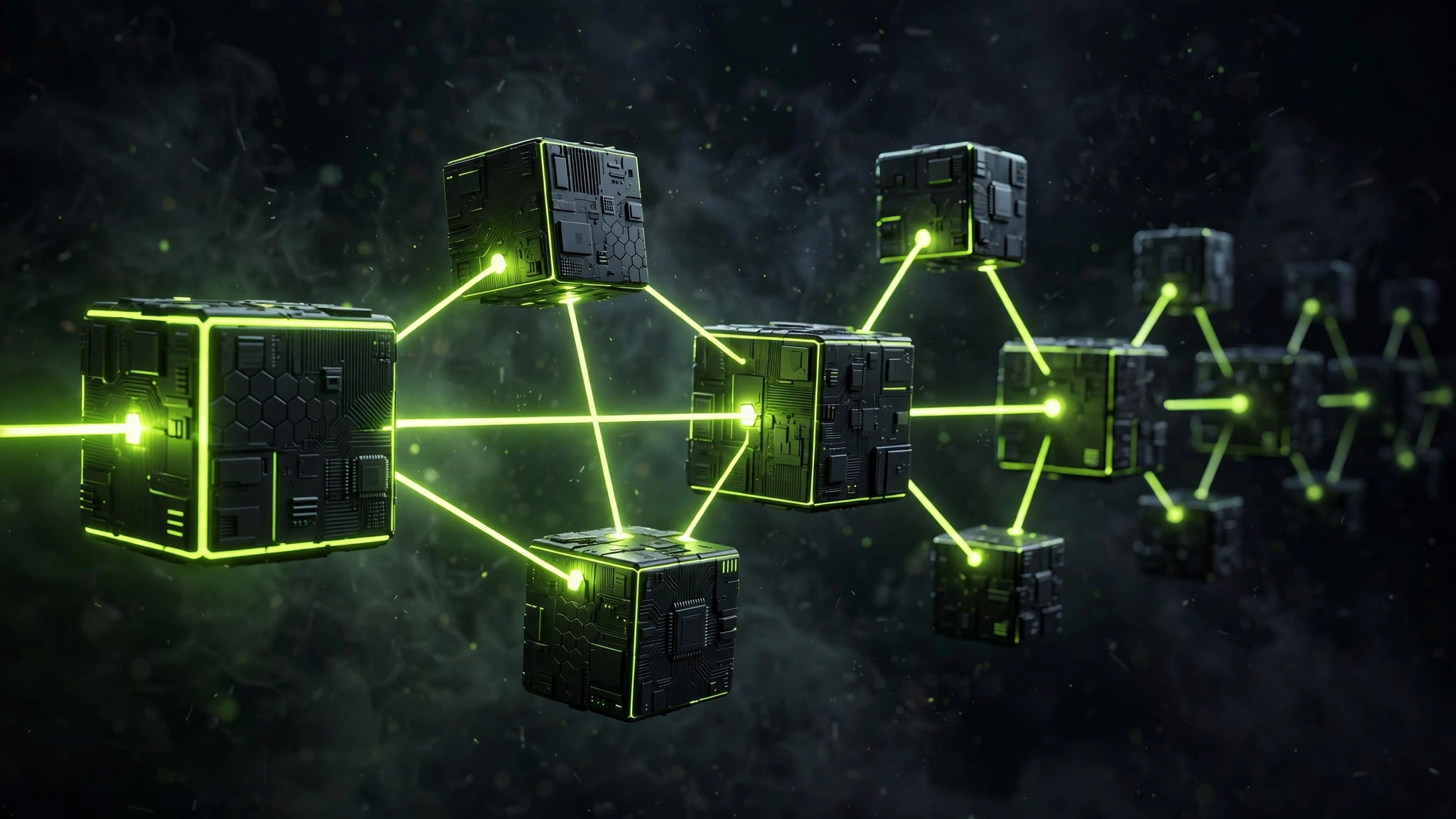
Each "page" of the notebook is called a block — a bundle of recent transactions or records. Each block is cryptographically linked to the one before it, forming a chain. Hence: blockchain.
Why Does This Matter? The Trust Problem It Solves
For all of human history, strangers doing business needed a trusted middleman: a bank to move money, a notary to verify documents, a company to keep the official records. Middlemen add cost, delay, and a single point of failure — if the record-keeper is corrupt or hacked, the truth is lost.
Blockchain's breakthrough is letting strangers reach agreement without a middleman. Two people who have never met, in different countries, can transfer value or prove ownership of something digital — and both can independently verify the result. The network itself, through mathematics and shared rules, replaces the trusted third party.
This is why the technology matters far beyond cryptocurrency speculation. It is a new answer to an ancient question: *how do strangers trust each other?*
The Three Pillars That Make It Work
1. Decentralization — no single owner
Instead of one company's servers, a blockchain runs on thousands of independent computers (called nodes) spread worldwide. No single person, company, or government controls the ledger. To corrupt it, an attacker would need to overpower the majority of the network simultaneously — on large networks, this is considered practically impossible.
Compare this to a regular database: if a bank's server is hacked or the bank goes rogue, your records are at their mercy. On a blockchain, there is no single throat to choke.
2. Cryptography — math instead of trust
Every transaction is sealed with advanced mathematics. Hashing turns each block's data into a unique digital fingerprint; change even one character of the data and the fingerprint changes completely, exposing the tampering. Digital signatures prove that a transaction was authorized by the true owner of the funds, without revealing their private key.
You do not need to understand the math — just the guarantee: records cannot be forged, and ownership cannot be faked.
3. Consensus — everyone follows the same rulebook
With thousands of independent computers, how do they agree on which new page gets added? Through a consensus mechanism — a set of rules the whole network follows. The two most common:
- Proof of Work: Computers compete to solve computational puzzles; the winner adds the next block. This is how Bitcoin works, and it is extremely secure but energy-intensive.
- Proof of Stake: Participants lock up ("stake") the network's coins for the right to validate blocks. Far less energy, and the dominant design for newer blockchains.
How a Transaction Actually Flows (Step by Step)
Let us follow a simple transfer from start to finish:
- You initiate. In your wallet, you enter the recipient's address and the amount, then approve. Your wallet signs the transaction with your private key — mathematical proof it is really you.
- It broadcasts. Your signed transaction is sent to the network, where nodes check it: *Does this person actually own these funds? Is the signature valid?*
- It waits in line. Valid transactions gather in a waiting area (often called the mempool) until a validator includes them in a new block.
- A block is created. Through the consensus mechanism, a new block containing your transaction (plus many others) is added to the chain.
- Everyone updates. All nodes add the new block to their copy of the ledger. Your transaction now has one confirmation; as more blocks pile on top, it becomes increasingly irreversible.
Public vs. Private Blockchains
Not all blockchains are open to everyone:
- Public blockchains (Bitcoin, Ethereum): anyone can join, read, and participate. Maximum transparency, maximum decentralization.
- Private/permissioned blockchains: run by a company or consortium, with restricted access. Faster and more controlled, but they reintroduce the trusted middleman — so purists argue they miss the point.
Beyond Crypto: What Else Uses Blockchain?
The same ledger idea applies anywhere trustworthy shared records matter:
- Decentralized finance (DeFi): Lending, borrowing, and trading without banks, run by smart contracts.
- Digital identity: Proving who you are online without surrendering data to corporations.
- Supply chains: Tracking goods — medicines, food, luxury items — from origin to shelf, with tamper-proof history.
- Cross-border payments: Settling international transfers in minutes instead of days.
- Digital ownership: NFTs and tokenized assets proving ownership of digital (and sometimes physical) items.
A Necessary Reality Check
Blockchain is not magic, and honest education includes its limits:
- It is slow and expensive compared to regular databases. A traditional database processes thousands of transactions per second almost for free; many blockchains manage dozens, at a cost. For most everyday record-keeping, a normal database is the better tool.
- "Immutable" cuts both ways. No middleman means no customer support. Send funds to the wrong address and no one can reverse it.
- Not every problem needs a blockchain. If all parties already trust each other, a shared spreadsheet works fine. Blockchain shines specifically where trust between strangers is the core problem.
- Energy and scale are real trade-offs. Different designs make different sacrifices between security, speed, and decentralization — there is no perfect blockchain, only different priorities.
Ready for the next layer? Explore our free beginner track — wallets, addresses, and staying safe are the natural next steps.
*Disclaimer: This article is for educational purposes only and does not constitute financial advice.*
Keep Learning
If you found this guide useful, these related guides will help you go deeper:
Frequently asked questions
Is blockchain the same thing as Bitcoin?
No. Bitcoin is one application that runs on a blockchain. Blockchain is the underlying technology — a shared, tamper-proof record-keeping system that many different cryptocurrencies and apps use.
Can blockchain records be changed or deleted?
On a well-established public blockchain, practically no. Changing a past record would require rewriting every block after it and convincing the majority of the network to accept the change, which is designed to be infeasible.
Do I need to understand blockchain to use crypto?
Not deeply. You can use crypto the way you use email without understanding internet protocols. But a basic grasp helps you avoid scams and make safer decisions.
Related guides
- What Is a Merkle Tree? Blockchain Data Explained Simply — A Merkle tree lets a blockchain prove thousands of transactions with one small fingerprint. Learn how hashes, leaves and roots keep crypto data tamper-proof.
- What Is Decentralised Storage? IPFS Explained for Beginners — IPFS stores files across many computers instead of one server. Learn how decentralised storage works, its limits, and what Indian beginners should know.
- What Is Sharding? How Blockchains Split to Scale Faster — Sharding splits a blockchain into parallel pieces to handle more transactions. Learn how shards work, Ethereum's danksharding plan, and the key risks.